
Check commercial fit-out delivery routes, package sizes, booking requirements and receiving responsibilities before materials leave the supplier.
Overview
Check the full material route before an order is placed. Measure the path from the unloading point through turns, doors and lifts to the place where the item will be installed. The size of the finished room does not tell you whether a large piece can reach it.
Compare package sizes with the actual route
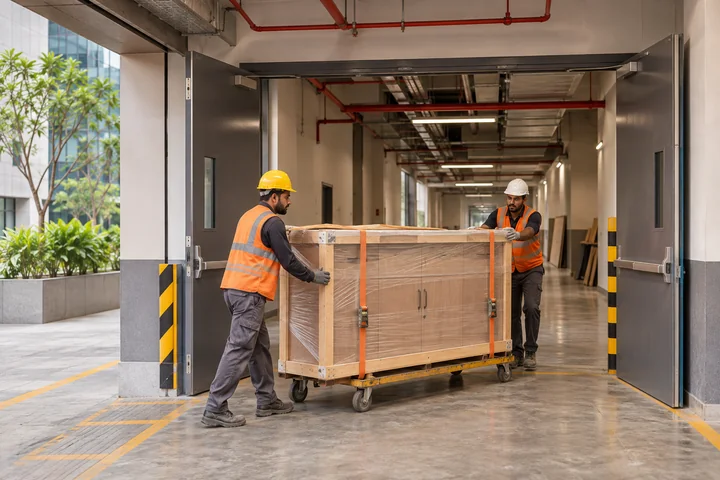
Ask suppliers for packaged dimensions, weights and handling requirements. Review them with the building manager and installation team against access constraints. A cabinet that fits the lift opening may still need to turn through a tight lobby. If the route is uncertain, arrange a site check before deciding whether an item should arrive in smaller parts.
For the related planning decisions, read the guide to confirming measurements before steel fabrication.
Agree arrival arrangements
Identify delivery hours, loading arrangements, bookings and any approvals for the actual premises. Decide who meets the delivery and where materials can wait if the destination is not ready. For an occupied building, coordinate how occupants and deliveries will use shared areas. Have the responsible team plan any lifting or handling that needs specialist equipment.
Match deliveries to site readiness
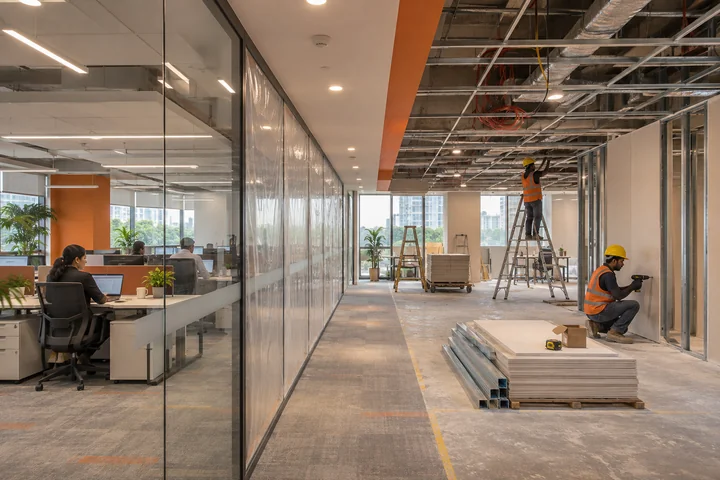
Group deliveries by the areas they serve and the work that can receive them. A finished item may be vulnerable if brought in before dusty or wet works are complete. Compare supplier lead times with the programme and agree what happens when site readiness or delivery dates change. Avoid leaving an important item with no secure staging location.
Work through an example
A bespoke reception counter may fit through the loading door yet be too long to turn at the last corner. Ask the fabricator to mark the package outline on a route plan and review assembly options at the destination. Include protection, staging and timing when deciding whether a sectional design is more practical.
Record receipt and onward responsibility
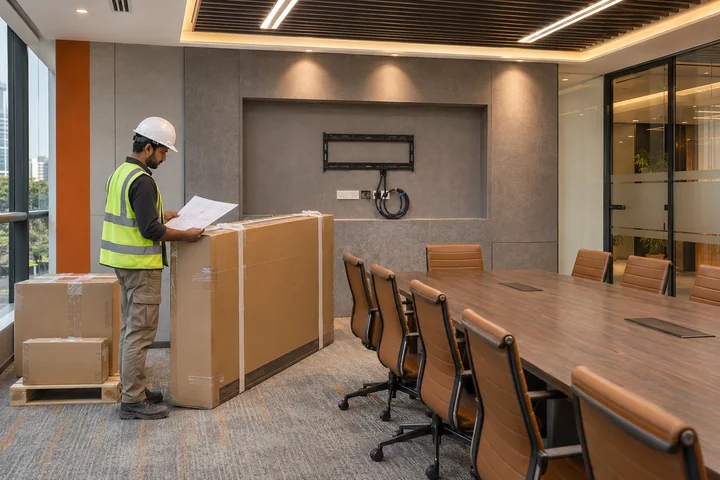
At delivery, identify who checks the item against the order and records any shortage or damage. Note its temporary location and which trade will move it next. For a phased fit-out, mark packages by room or phase so items do not get opened or moved unnecessarily.
Bring your current plan and the decisions still open when you discuss construction project management.
Check the packaged item rather than the catalogue footprint
Ask the supplier for packaged dimensions, weight information and any handling requirements. Review the complete route with the building contact, including turns, door openings, lift arrangements and the unloading point. The final installed dimensions may not describe the delivery challenge.
Record booking arrangements and the person authorised to receive the consignment. Agree how visible delivery damage will be recorded and who protects the item after receipt. If site readiness changes, notify the supplier before dispatch instead of relying on temporary storage that has not been agreed.
Does lift access alone confirm that a delivery will fit?
No. Check the full route and handling plan, including turns and openings before and after the lift. Any lifting or specialist handling method needs review by the responsible competent people.
Discuss your project
Bring the delivery schedule and building access information to discuss fit-out logistics. Explore construction project management to discuss the relevant scope.