
Write a commercial fit-out snag list with clear locations, photographs, expected corrections, responsible parties and evidence of closure.
Overview
Write each snag so a contractor can find it, understand the expected result and show that it has been resolved. Record the room, exact location, description, agreed owner and target review date. Separate items that affect safe or intended use from finish issues that can be addressed in an agreed follow-up.
Start with a common walk-through
Use the room list and current scope to walk the site with the people who can assign and accept actions. Note which items are incomplete and which need review against a sample, drawing or approved change. Photograph the location where it will help someone identify the issue. Avoid general comments such as fix the finish when several surfaces could be involved.
For the related planning decisions, read the guide to the office fit-out handover checklist.
Make the expected outcome clear
Describe what you observed and reference the agreed drawing or sample when appropriate. For example, a conference-room door that rubs the floor needs a different follow-up from a finish mismatch. Ask the responsible contractor or specialist to assess the cause and propose the remedy where necessary. Record the outcome to check rather than prescribing a repair without the right information.
Keep one current list
Give each item a reference and avoid creating a second entry when another person raises the same issue. If responsibility shifts, update the existing record and inform both parties. Mark the stage of each item so the next review can distinguish assigned, corrected and accepted work. Escalate any item that affects occupation through the agreed project process.
Work through an example
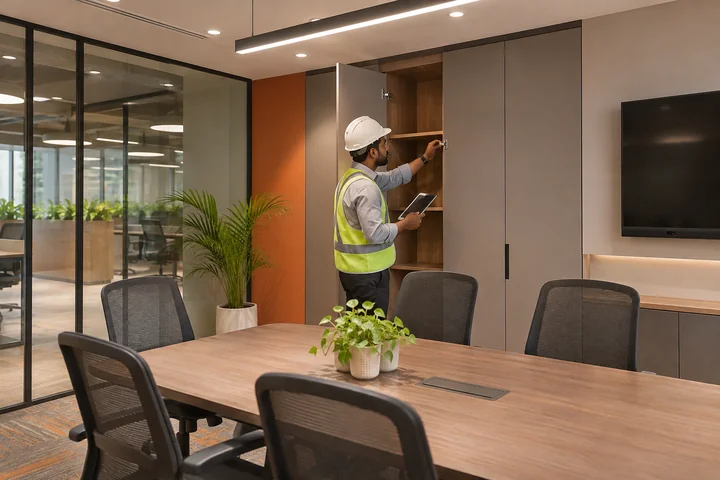
A practical snag might read as follows. In meeting room two, the cupboard door catches the adjoining handle when opened fully. Reference the room elevation and ask the joinery contractor to assess the cause. Record the expected result as unobstructed operation in the agreed arrangement, then demonstrate it during the close-out walk.
Revisit before closing an item
Check the result at the original location against the agreed outcome. Use a new photo or signed note when it helps establish what changed. Keep unresolved items visible with their owner and review date. Carry the final agreed list into the wider handover record.
Bring your current plan and the decisions still open when you discuss construction project management.
For a general reference on recording project and systems information, see the VA commissioning manual.
Describe an observable correction
Write what is wrong, where it is and what the responsible team will review. A note such as 'finish poor' leaves too much interpretation. A room reference and photograph of the specific marked panel help the installer understand the issue without guessing which surface is meant.
Keep one current status for each item and record the return visit or reinspection. Do not mark an item closed only because somebody has reported that work is complete. Ask the appropriate specialist to review concerns involving system performance or safety.
Is every unfinished task a defect?
Not necessarily. Distinguish work still due, a defect requiring correction, missing information and a new request outside the agreed scope. The responsible project team should confirm how each item is treated.
Discuss your project
Bring your current room-by-room snag list to discuss a clear fit-out completion plan. Explore construction project management to discuss the relevant scope.